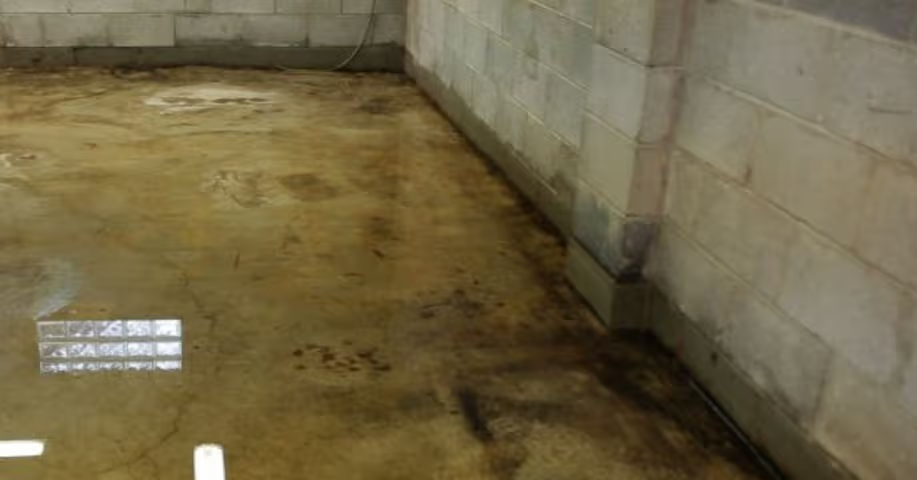
Most basement leaks we're called to fix in Dhaka share the same root cause: waterproofing was treated as a finishing item instead of a structural design decision. By the time water is visible on an interior wall, the project is already in repair mode — negative-side treatment, injection, and damage control — instead of the design-stage decision that would have prevented it.
Dhaka's water table sits close to the surface for much of the year, and rises further during the monsoon. Any basement, water tank, or below-grade structure here is effectively a boat sitting in wet ground for months at a time. Positive-side waterproofing — applied to the external face of the structure, before backfill — is the only system that resists hydrostatic pressure the way it's meant to. Once the building is backfilled and occupied, that option is gone.
That's why negative-side treatment (applied from inside, after the fact) is a repair, not a design: it manages symptoms — visible dampness, active leaks, efflorescence — but it doesn't stop water from reaching the concrete in the first place. Crystalline systems can help by growing crystals into the pore structure of the concrete and blocking capillary paths, and they're often the most practical option once a structure is already built and occupied. But they work best combined with a proper diagnosis of where water is actually entering — through construction joints, cold joints, pipe penetrations, or the raft itself — rather than a blanket coating applied and hoped for.
What we specify before the raft is poured: a positive-side membrane or crystalline admixture system matched to the water table and soil conditions, correctly detailed movement and construction joints with waterstops, and a drainage strategy that reduces hydrostatic load on the structure rather than fighting it head-on. Getting this right at design stage costs a fraction of what negative-side remediation costs after handover — and it's the difference between a basement that stays dry and one that needs annual intervention.