Carbon fibre reinforced polymer (CFRP) strengthening gets requested a lot more often than it's actually the correct answer. It's a genuinely powerful tool for increasing flexural and shear capacity without adding significant dead load or reducing headroom — but it only works within a fairly specific set of structural and site conditions, and applying it outside those conditions wastes money on a system that won't perform.
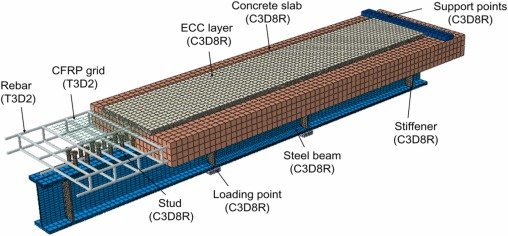
CFRP works by bonding high-tensile carbon fibre sheets or strips to the tension face of a concrete member — typically the underside of a slab or beam, or the sides of a column — using a saturating epoxy resin. The fibre takes tension the concrete can't, effectively adding external reinforcement without cutting into the existing structure. This makes it well suited to change-of-use scenarios: a slab originally designed for office loading being repurposed for storage, or a beam that needs additional capacity after a design or construction defect is discovered.
Before recommending CFRP, we run a load-path check: what is the member's existing capacity, what's the new demand, and does the load actually reach the areas being strengthened without redistributing somewhere else in the structure first. CFRP strengthens the member you bond it to — it does nothing for a downstream column or footing that's also under-capacity for the new load. Skipping this step is the most common reason CFRP retrofits underperform.
Anchorage detailing matters as much as the fibre itself. CFRP bonded to concrete relies entirely on the bond between resin and substrate — if that bond fails at the plate end (a known failure mode called end-peeling), the strengthening effectively does nothing. Proper detailing means mechanical anchorage or U-wraps at termination points, correctly prepared substrate (typically grit-blasted, not just ground), and moisture content within the epoxy manufacturer's tolerance at the time of application.
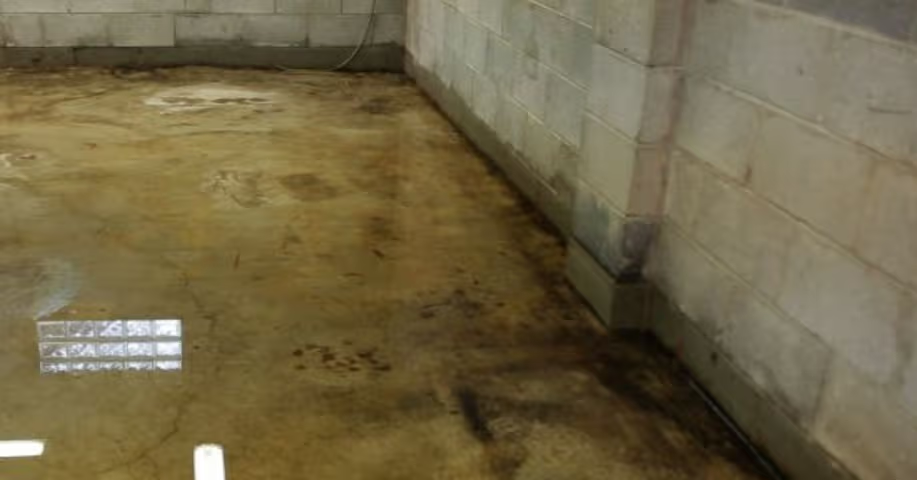
CFRP is the wrong answer when the substrate concrete itself is deteriorated or contaminated — carbonation, chloride ingress, or active corrosion in the reinforcement need to be resolved first, or the new fibre is being bonded to a substrate that will keep failing underneath it. It's also not a fix for a structure with a fundamental load-path or stability problem; in those cases, CFRP treats a symptom while the actual deficiency remains. Site conditions matter too: CFRP application needs a controlled, dry environment during cure, which rules it out or delays it on active wet sites without proper protection.
Where it is the right answer, CFRP is fast to install, adds negligible weight, and avoids the disruption of jacketing or section enlargement — which is why it's become a standard tool for beam and column retrofits across the industrial and commercial projects we work on.